Personal Project · Work in Progress
de_Shed
A compact Counter-Strike 2 hostage map where the Counter-Terrorists control the tempo through fast rotations, multiple breach options and scripted tools.
Design Brief
Design Brief
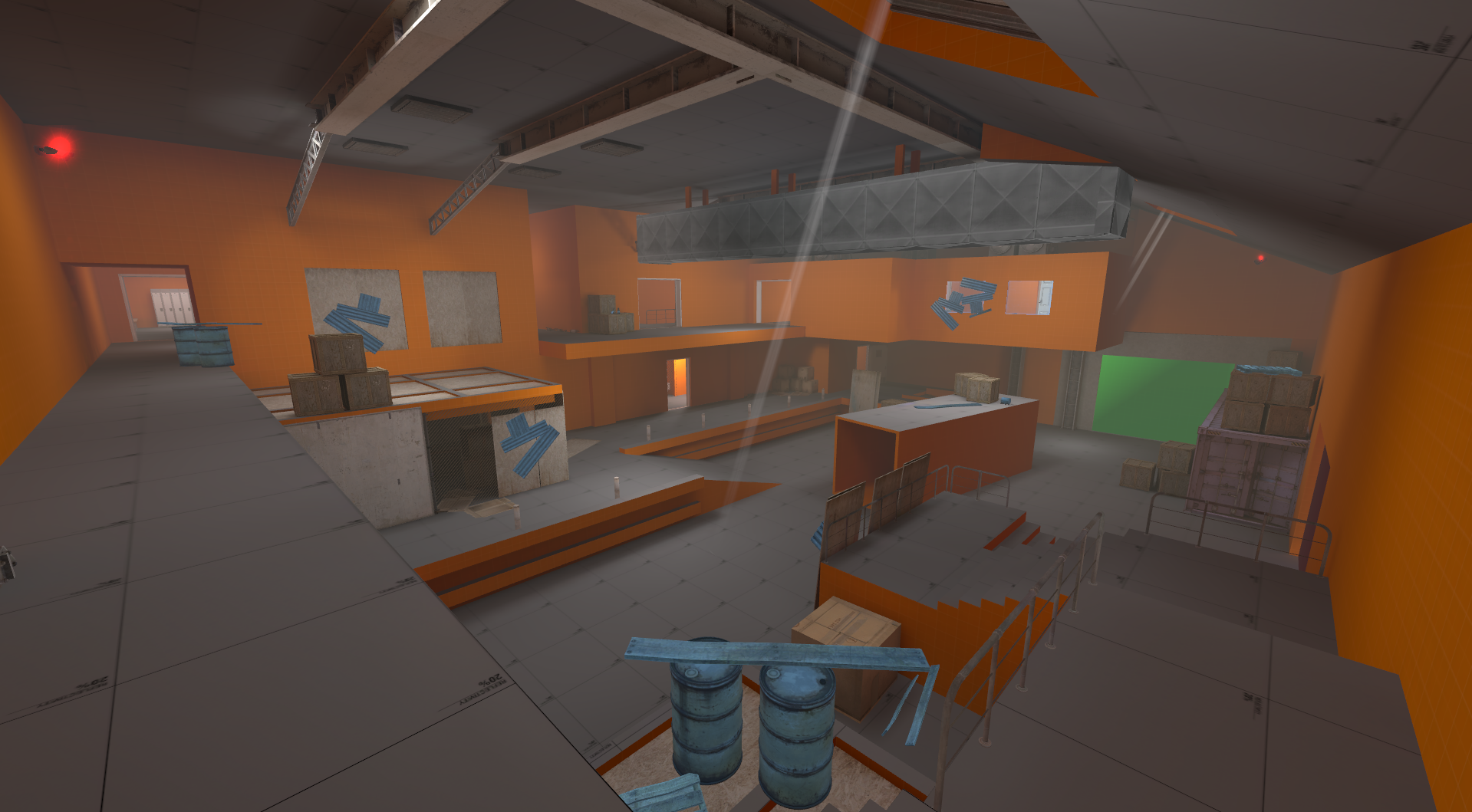
de_Shed is a deliberately compact Hostage map designed around short rotations, frequent encounters and fast rounds. The small footprint keeps players close to the action and makes every change of position immediately relevant.
The key asymmetry is that the Counter-Terrorists decide the pace of the round. They can commit to an immediate breach, apply pressure across several entrances, or slow the game down and force the defending team to react before choosing where the real attack will happen.
Visually and structurally, the project returns to the roots of cs_assault: a warehouse embedded in an urban Chicago setting. The goal is not to recreate the original map, but to preserve its direct readability and strong attacker-versus-entrenched-defender identity in a new layout.
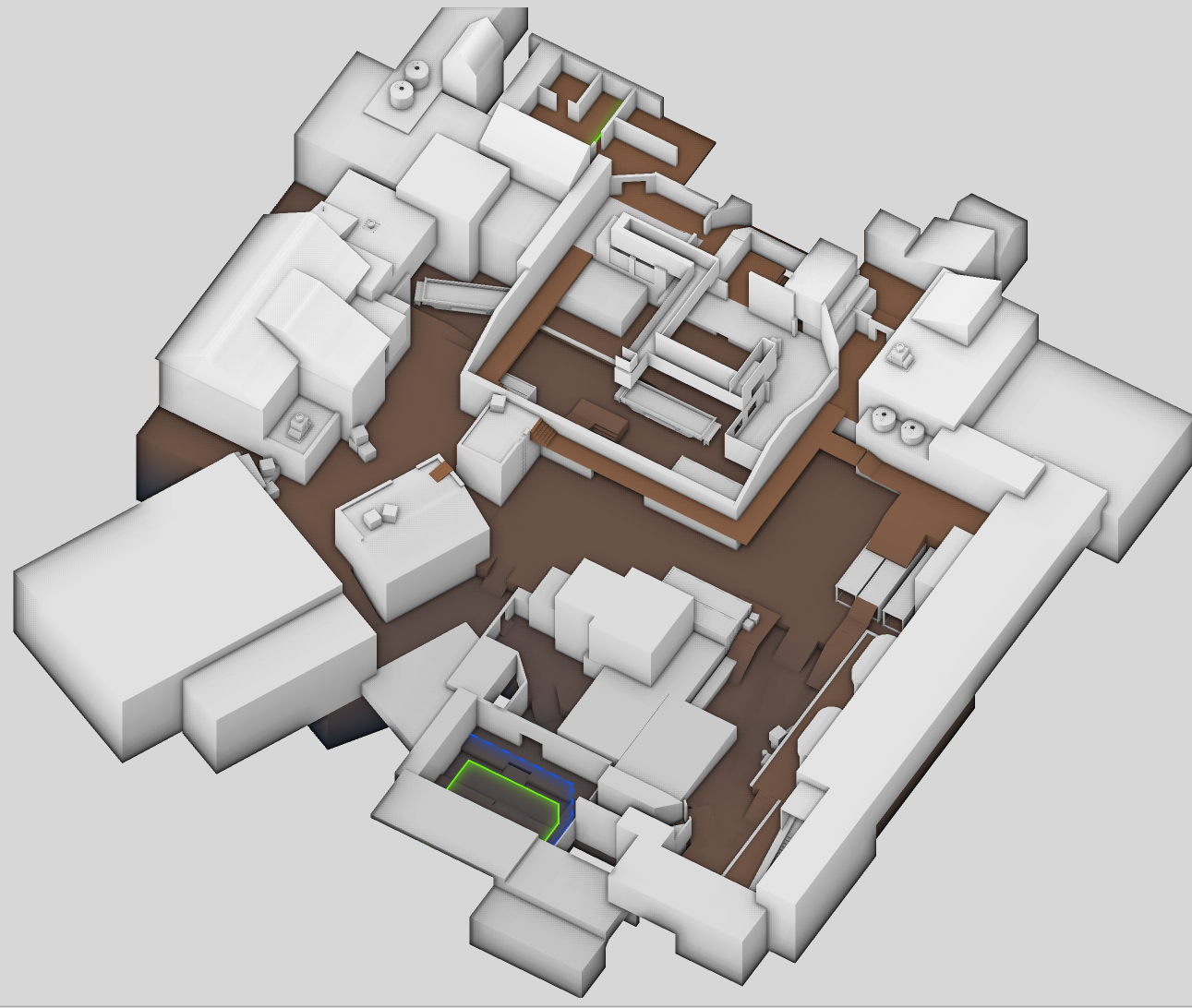
Two large industrial doors create clear, highly readable assault fronts and direct confrontations.
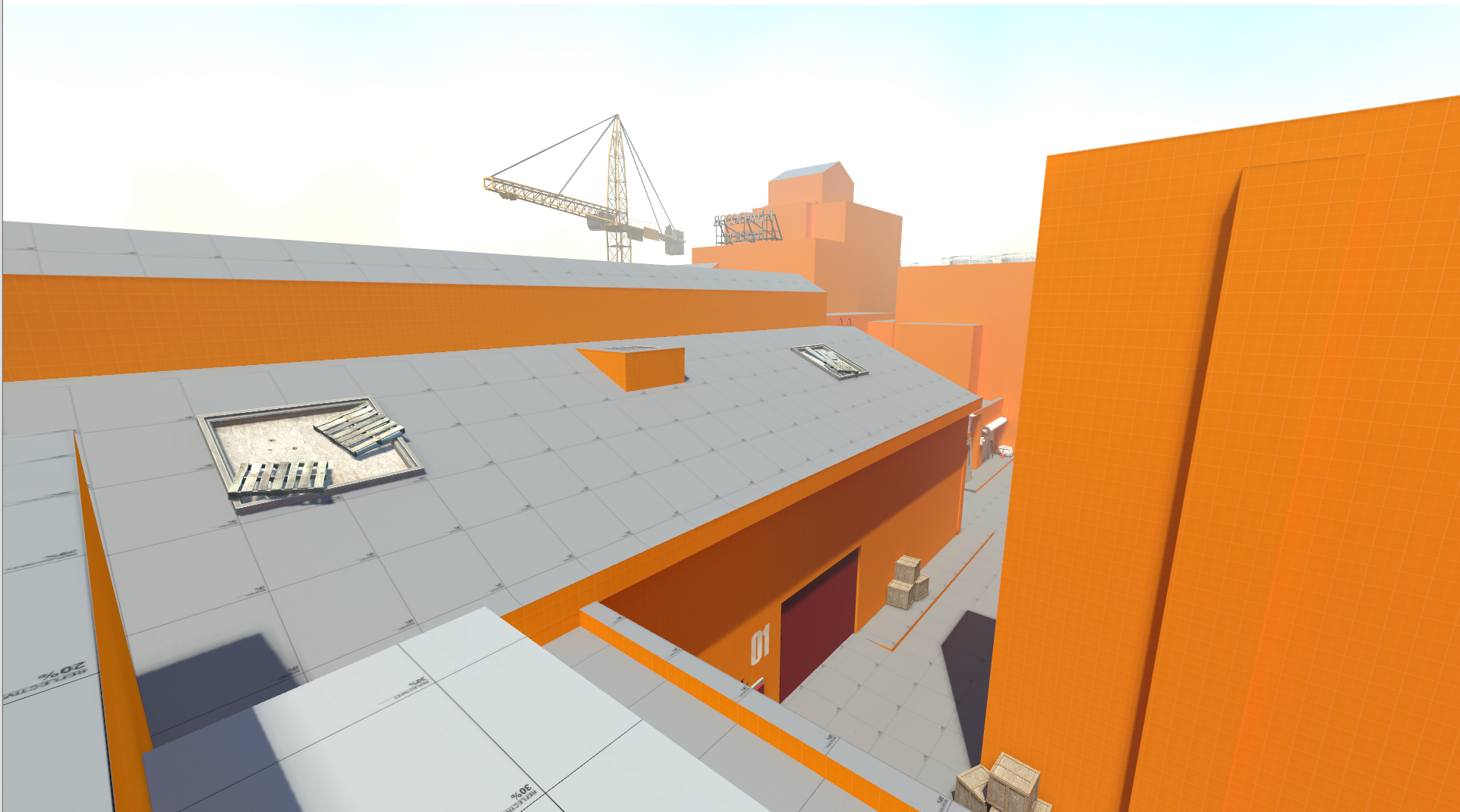
The rooftop route adds vertical pressure and lets the CTs enter from above rather than committing to a ground-level breach.
A smaller side entrance creates a more discreet alternative that can be used to punish defenders who over-commit elsewhere.
The compact footprint keeps transitions between these options short, making fast redirects and fake pushes practical during a round.
Building the Experience
Building the Experience
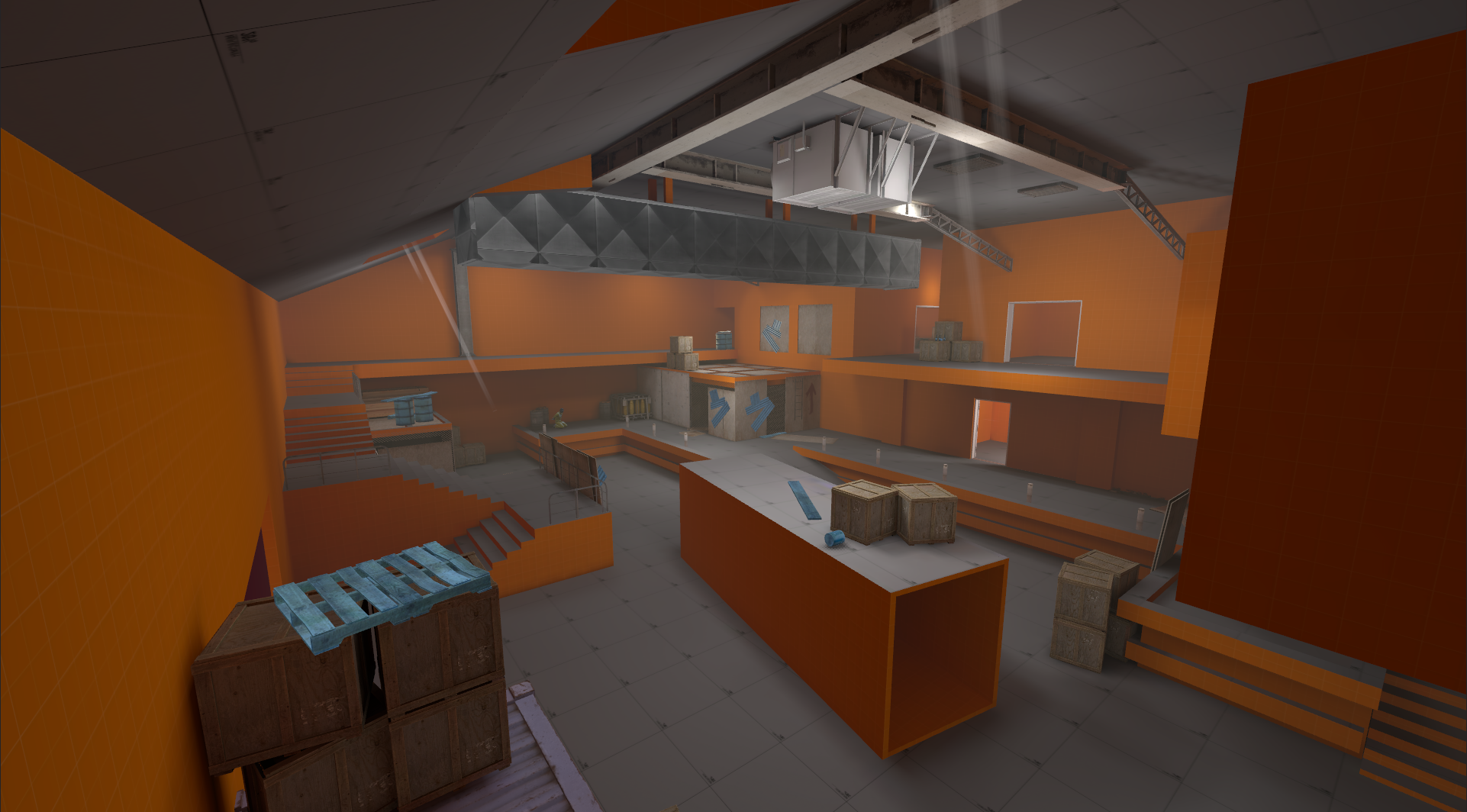
The four entry options are not intended to behave as equivalent lanes. Each creates a different type of pressure on the defenders. The large doors make an assault obvious and dangerous, while the roof and side entrance create uncertainty and force the Terrorists to divide their attention.
Because the map is small, the CTs can move between these options quickly. This makes the route network useful not only for navigation, but also for controlling information: showing presence at one entrance, pulling defenders out of position, then converting that pressure into an attack somewhere else.
Scripted Interactions
Giving attackers tools
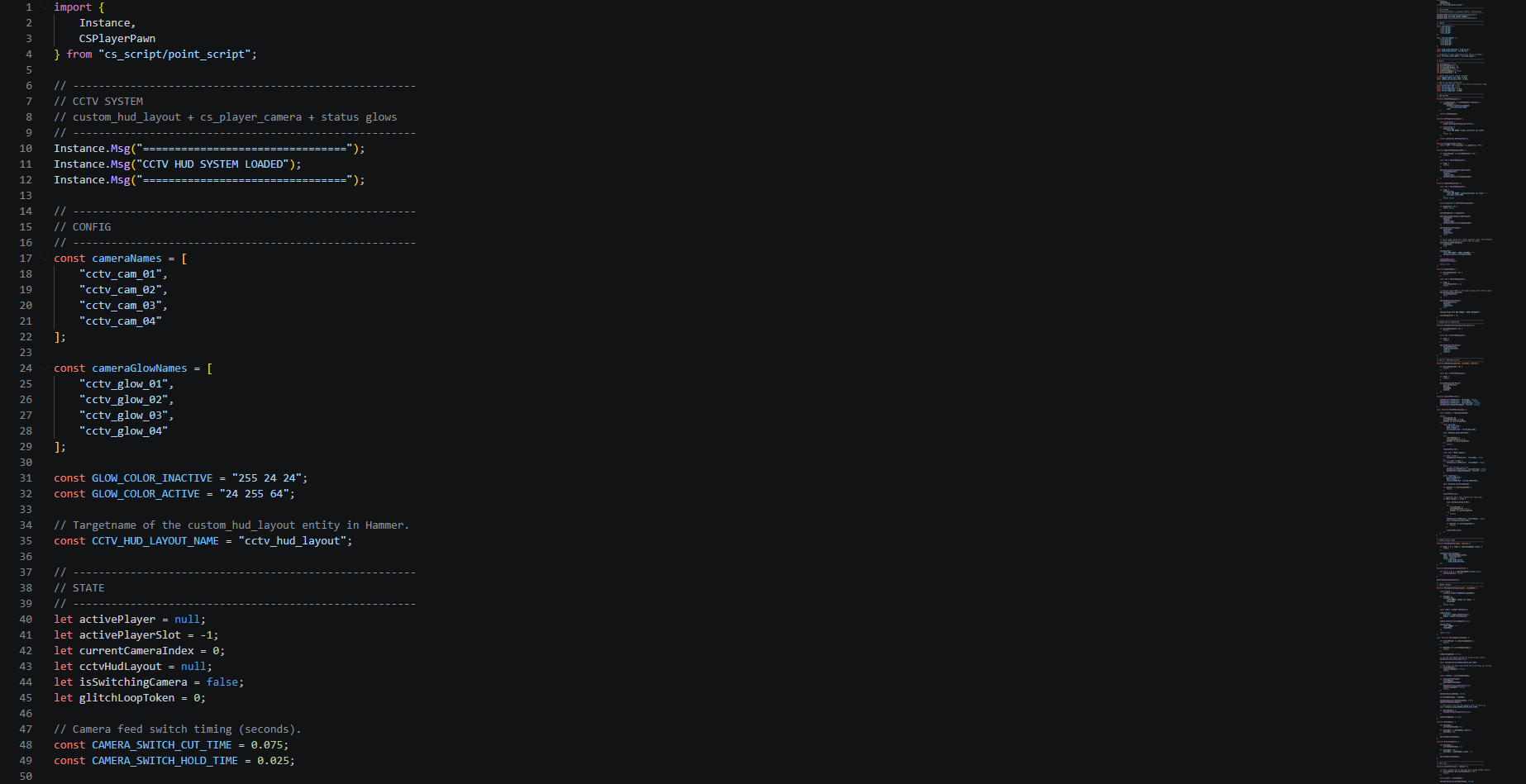
I use Source 2 scripting to give the CTs ways to influence the warehouse before and during the breach. The two large doors are interactive elements rather than permanently open routes, making the act of opening an entrance part of the attack itself.
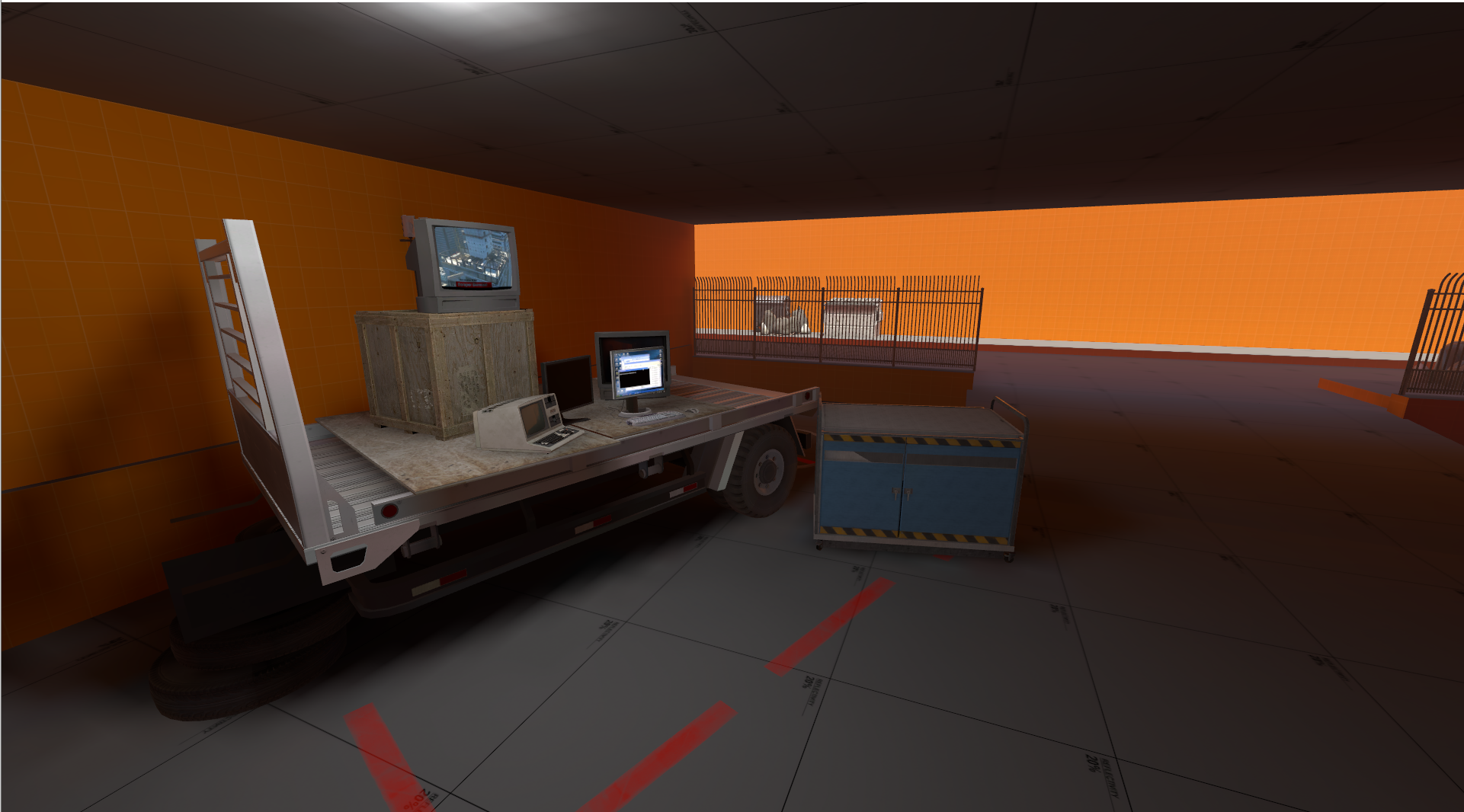
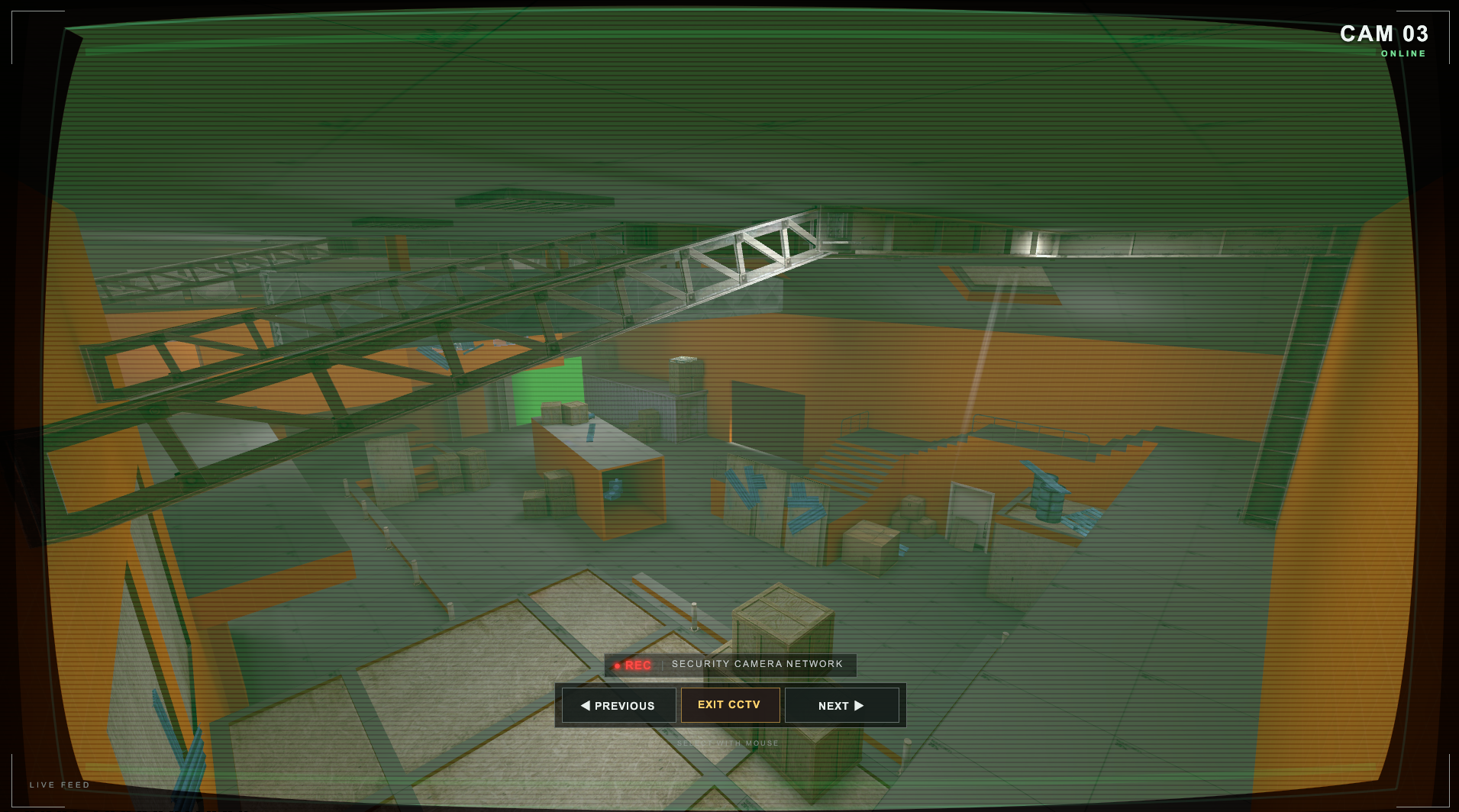
The CCTV system extends this idea by turning information gathering into a playable interaction. Instead of simply giving the attackers more routes, these systems give them more ways to create, confirm and exploit pressure.
Hostage Defense
Discouraging camping through layout
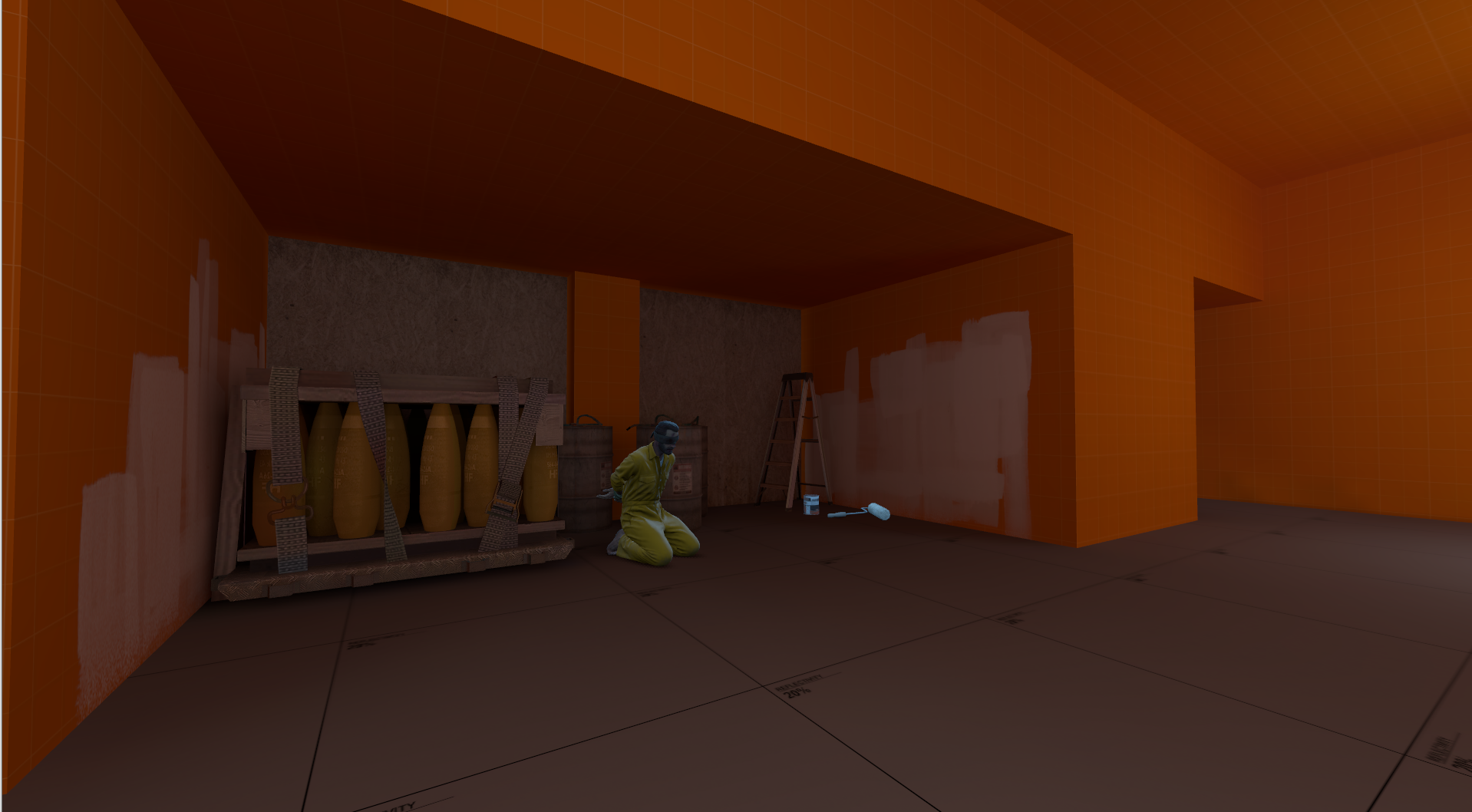
Camping directly around the hostages remains a viable strategy for the Terrorists, but the layout is intentionally designed to make it difficult to sustain. These positions provide immediate control over the objective, but give up influence over the rest of the warehouse and make it harder to contest the CT entry points.
The more defenders commit to the hostage area, the more space they concede elsewhere. Rather than preventing hostage camping through artificial restrictions, the layout itself exposes the weaknesses of that strategy and encourages the defending team to spread its control across the building.
Current Build
Playable blockout
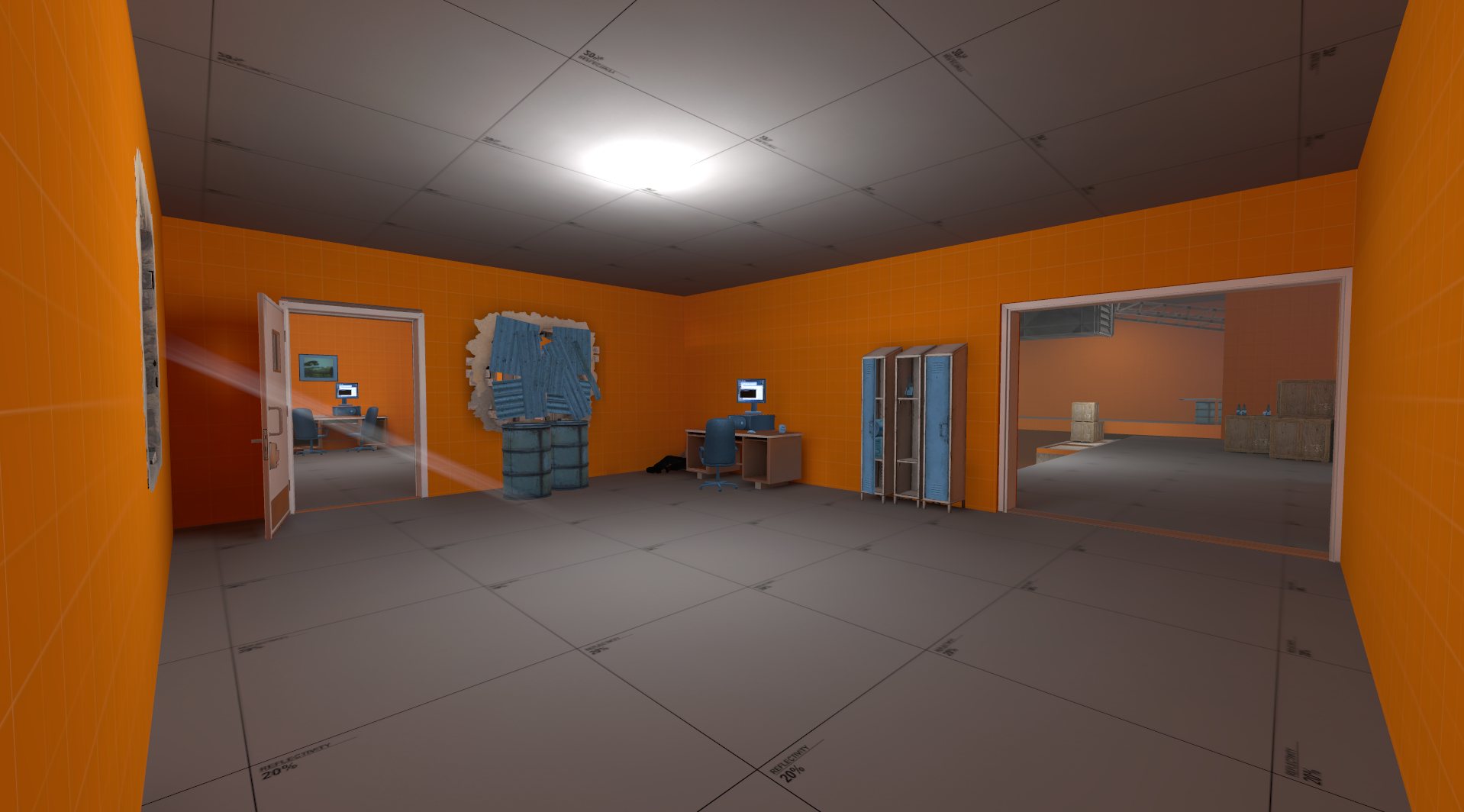
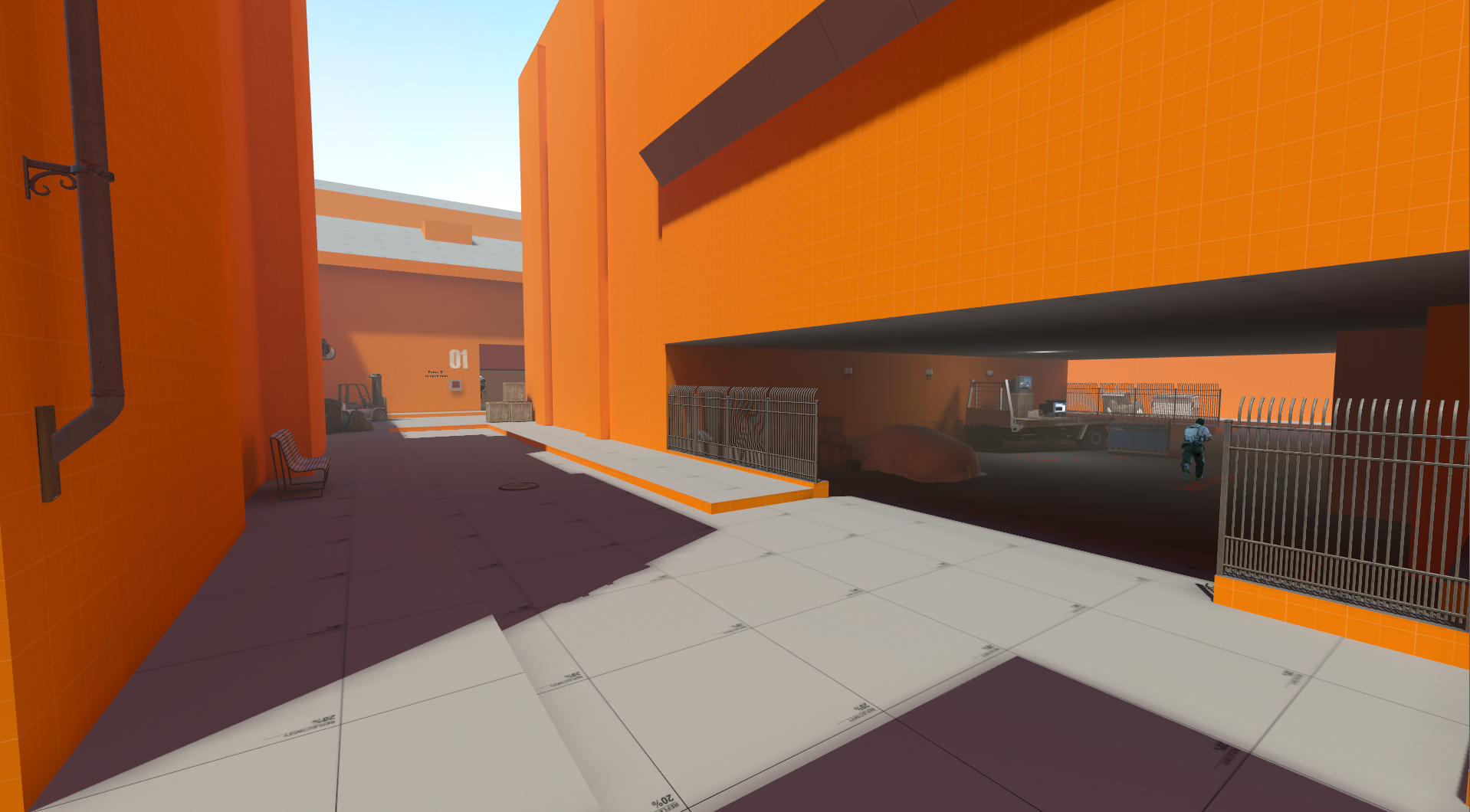
The map is currently playable and remains in active iteration. The core layout, hostage objective, main attack routes and scripted CCTV interactions are already functional, allowing me to test the intended relationship between speed, information and attacker-controlled pacing.
The next passes will continue to refine combat spaces and timings before moving further into the environment art, readability and polish of the Chicago warehouse setting.
Playtest
Try the current build
The workshop link will be added here as soon as the public build is ready.