Progressive combat
Rather than relying on a single large battle, the level was structured around smaller encounters that gradually introduce new threats, spatial constraints and gameplay requirements.
Personal Project
Designing a short Half-Life 2 combat experience focused on escalating tension, environmental storytelling and Actor I/O scripting.
Project Overview
Metal Revolving is a personal Half-Life 2 level created to deepen my understanding of Source Engine level design and scripting workflows.
The project was built around a simple objective: create a short combat-focused experience that gradually escalates toward a climactic encounter with a Combine helicopter.
Beyond the combat itself, the project was an opportunity to explore Actor I/O logic, encounter pacing and environmental storytelling using Valve's design principles.

Escalation
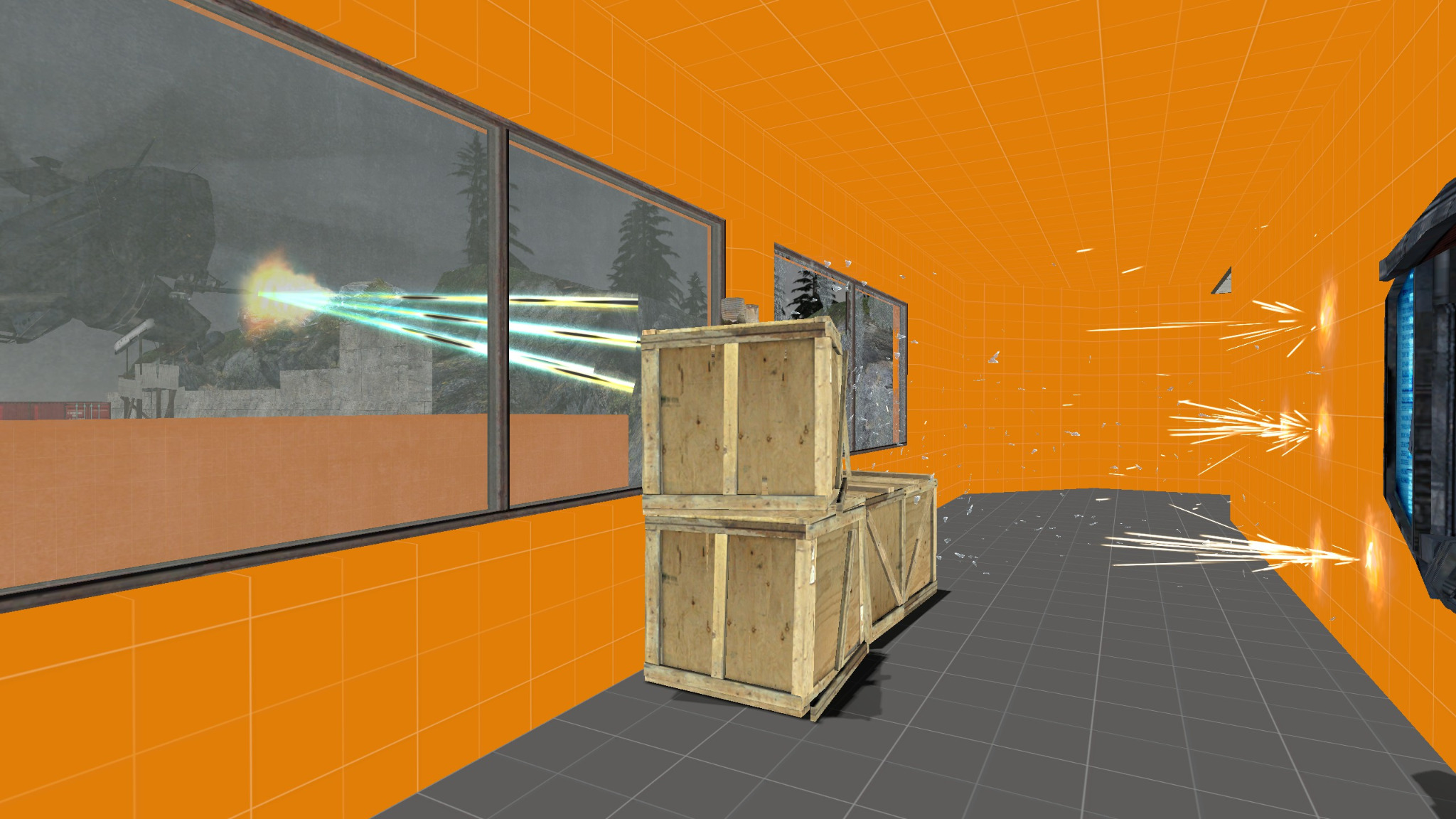
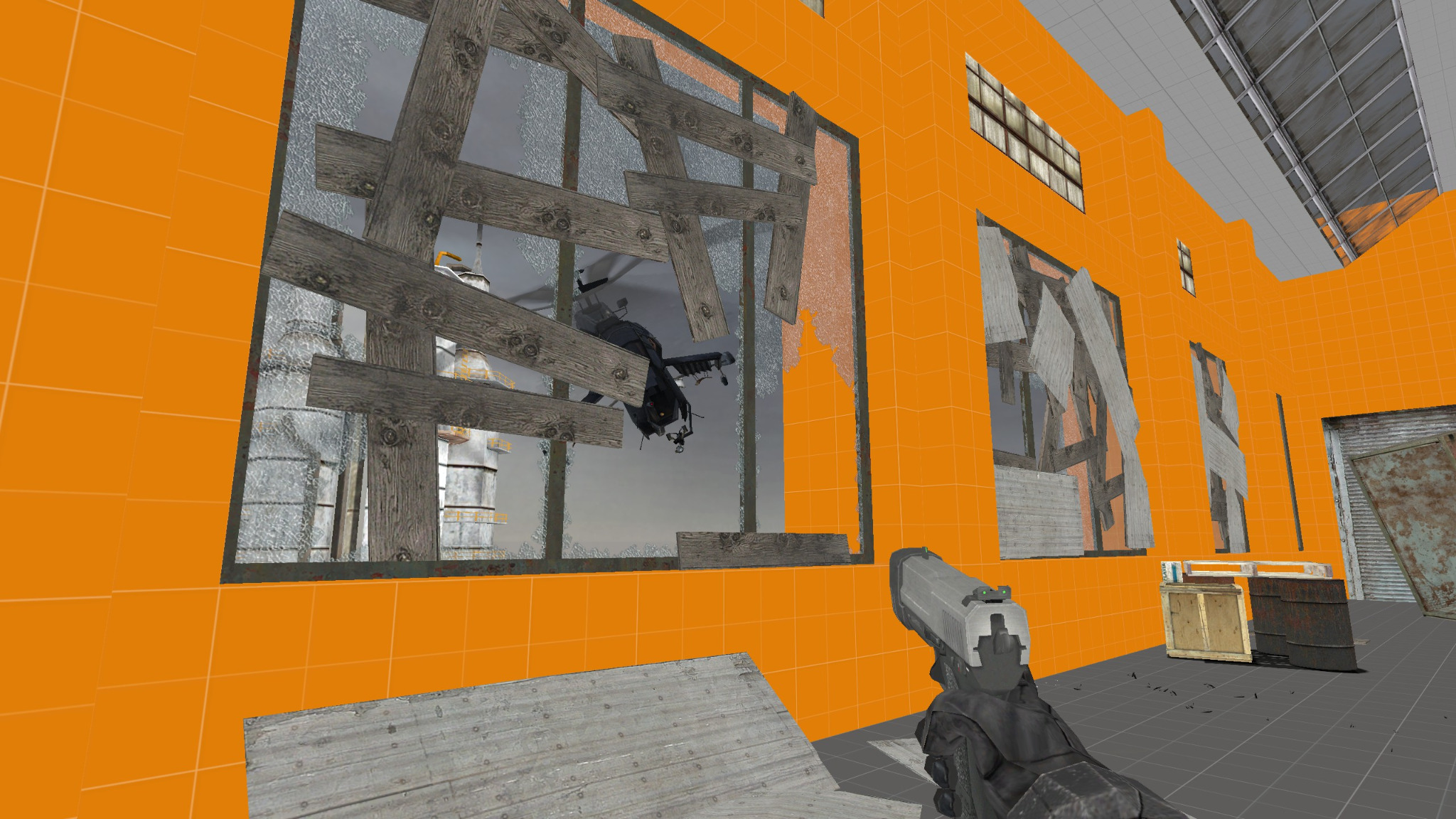
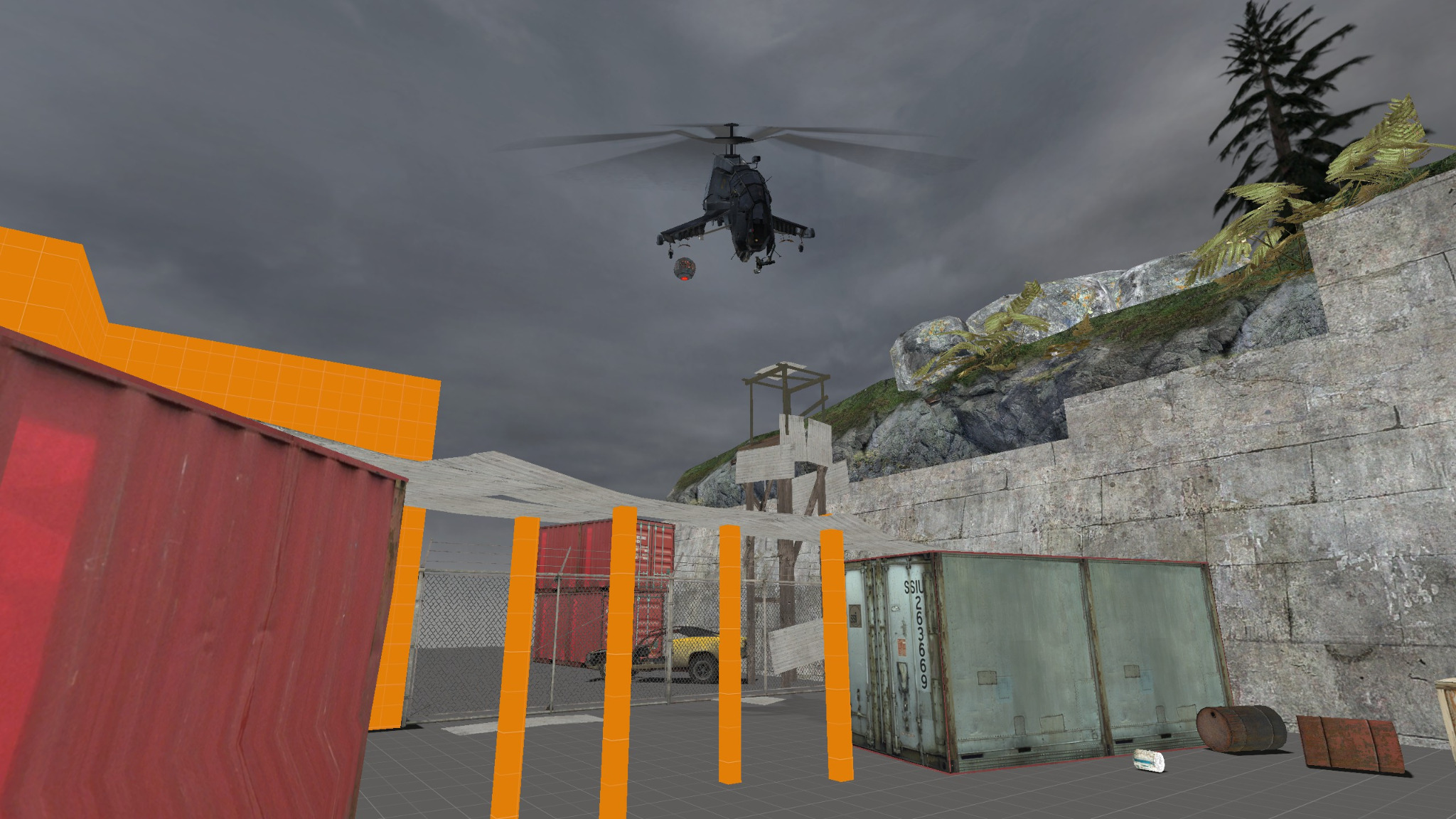
One of the core design goals was to make the helicopter feel present long before the final battle. Throughout the level, the player repeatedly catches glimpses of the aircraft through windows, broken walls and exterior spaces.
These moments create anticipation and establish the helicopter as a persistent threat rather than a surprise boss encounter. By the time the final battle begins, the player already understands its importance within the level's narrative and gameplay progression.
Design Goals
Rather than relying on a single large battle, the level was structured around smaller encounters that gradually introduce new threats, spatial constraints and gameplay requirements.
The helicopter is used as a recurring presence, creating tension before becoming the main focus of the final encounter.
Enemy waves, helicopter attacks, progression events and environmental destruction are connected through Source Engine scripting logic.
Final Arena
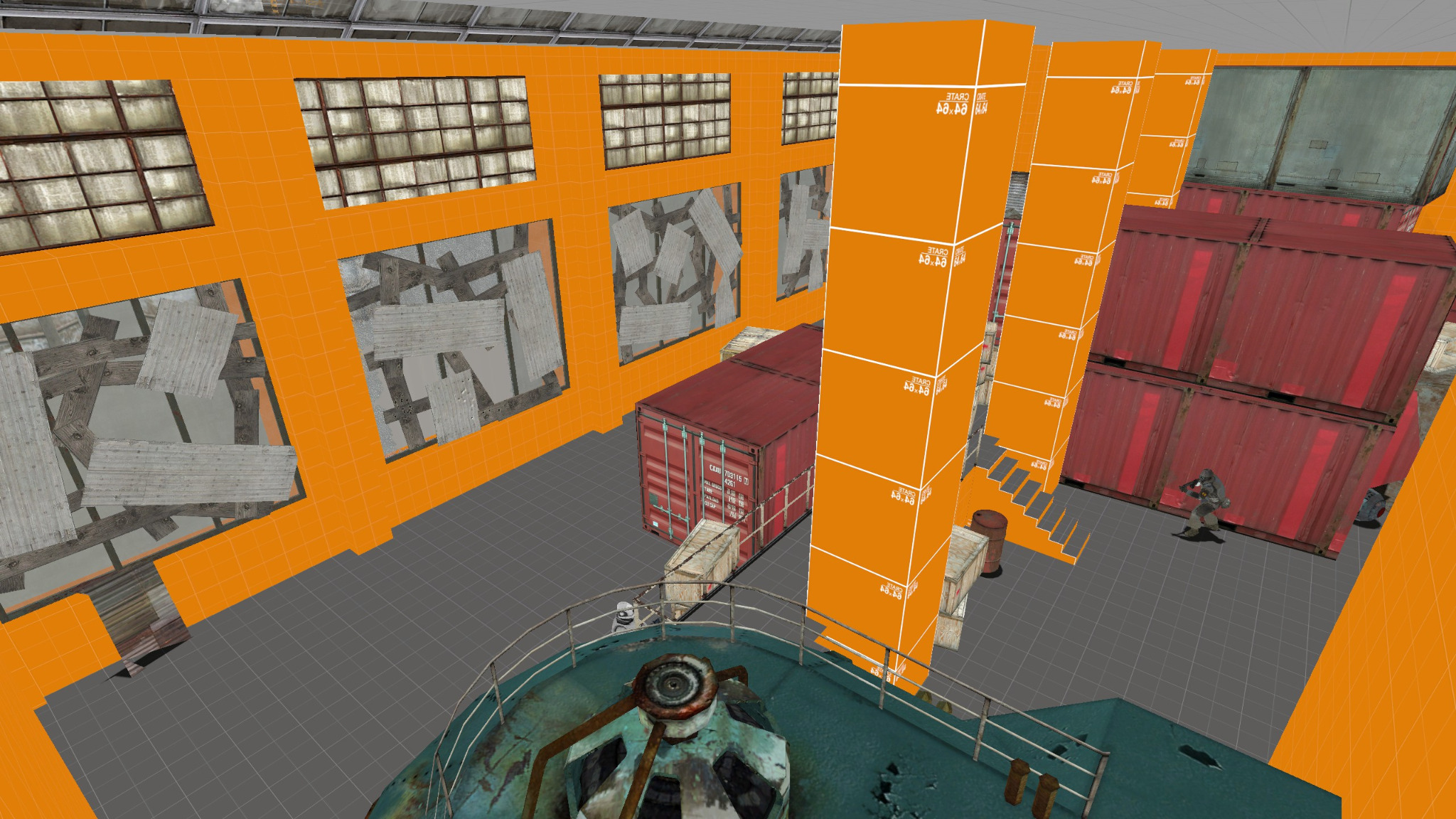
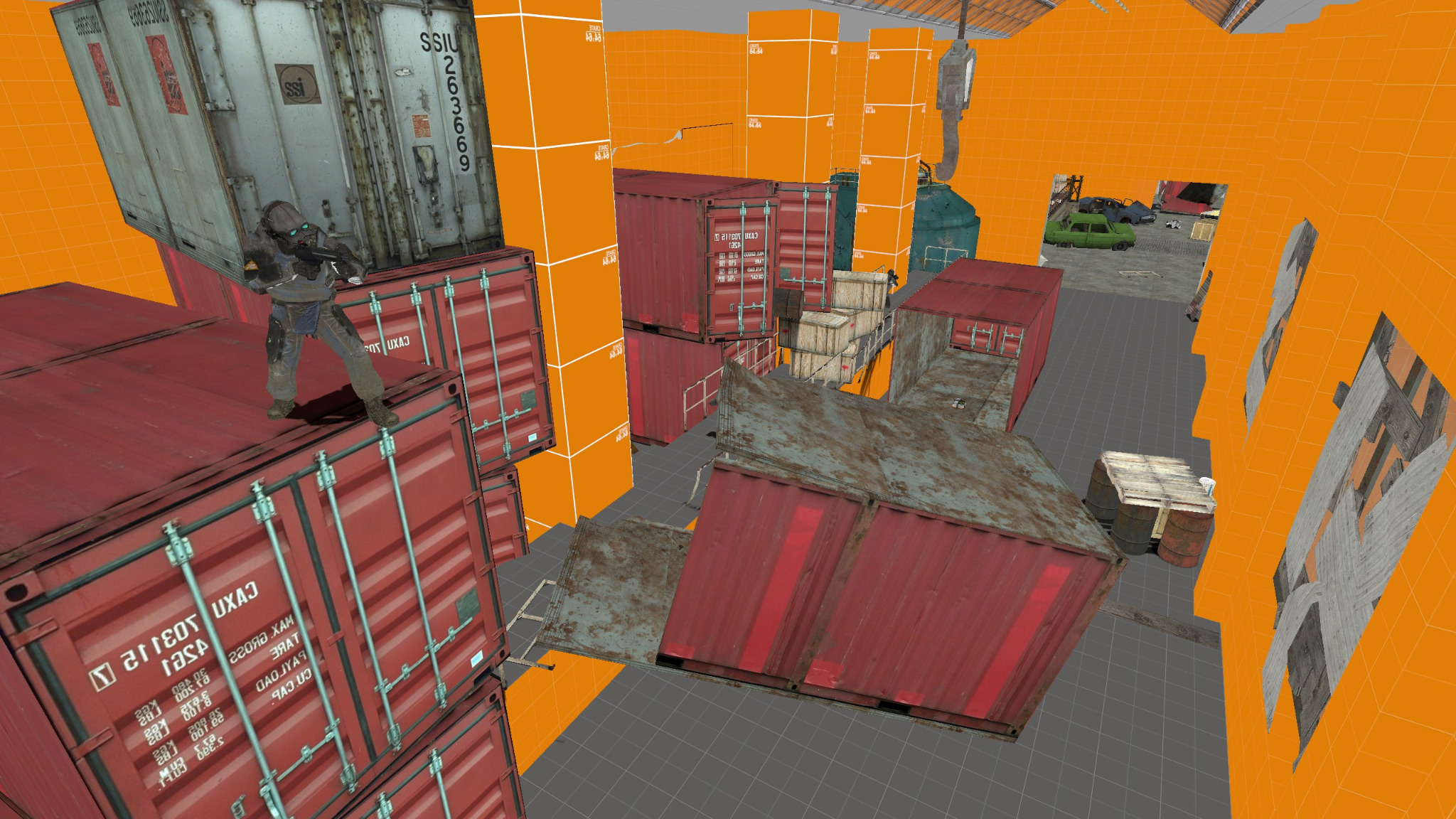
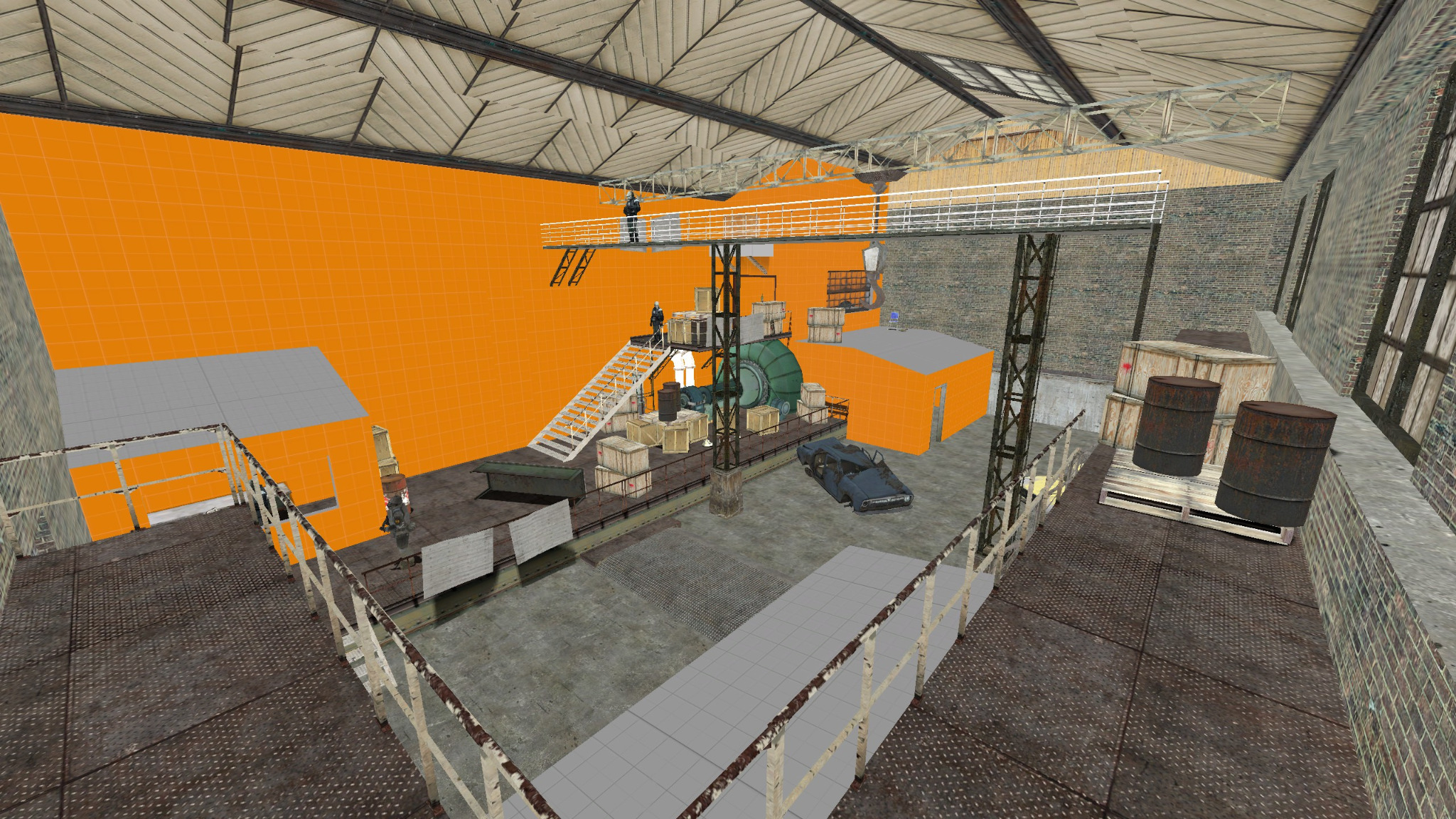
The final encounter takes place inside a large industrial warehouse built around multiple elevation layers, sightlines and traversal opportunities.
Shipping containers create cover and movement routes while elevated walkways provide firing positions for Combine soldiers. The objective was to create a combat space that remains readable while constantly encouraging movement.


Actor I/O Scripting
A significant part of the project focused on learning and experimenting with Source Engine's Actor I/O system.
Enemy waves, helicopter attacks, environmental destruction and progression events are all connected through scripted logic. Instead of relying on isolated encounters, the scripting system allows multiple gameplay events to react to player progression and reinforce the level's escalation.
Environmental Interaction
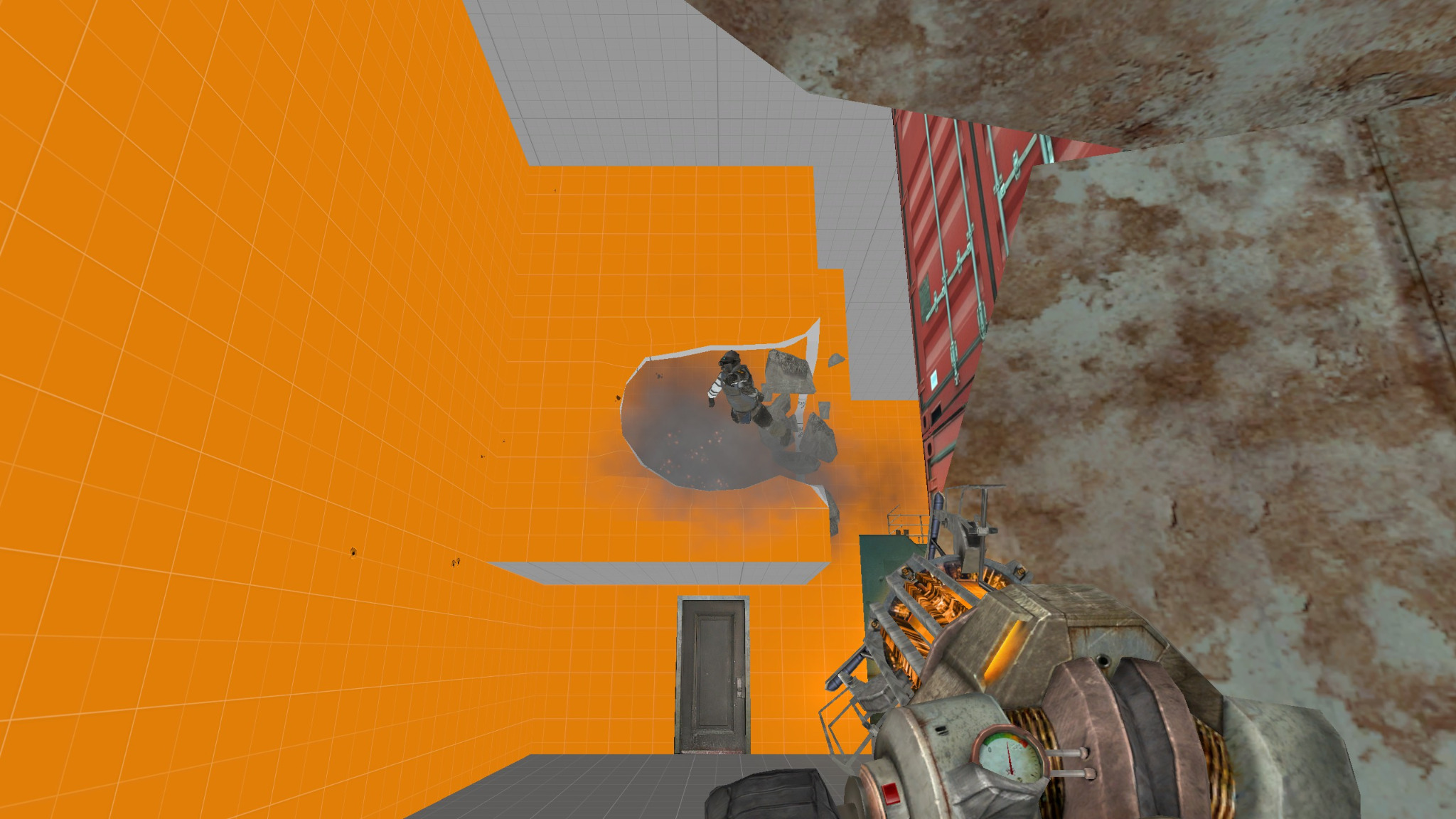
Inspired by Half-Life 2's design philosophy, several encounters encourage players to use the environment rather than relying solely on weapons.
Explosive barrels, movable objects and Gravity Gun interactions provide alternative solutions and help diversify combat situations.
Takeaways
Metal Revolving taught me how encounter design, level layout and scripting systems can work together to create memorable gameplay sequences.
More importantly, it reinforced the importance of escalation. Every combat space, scripted event and environmental interaction was designed to support a gradual increase in intensity leading toward the final confrontation.
The project remains one of my most valuable explorations of Source Engine level design and Actor I/O workflows.